- Evangelism and Church Planting
- Church Revitalization
- Missions Mobilization
- Give

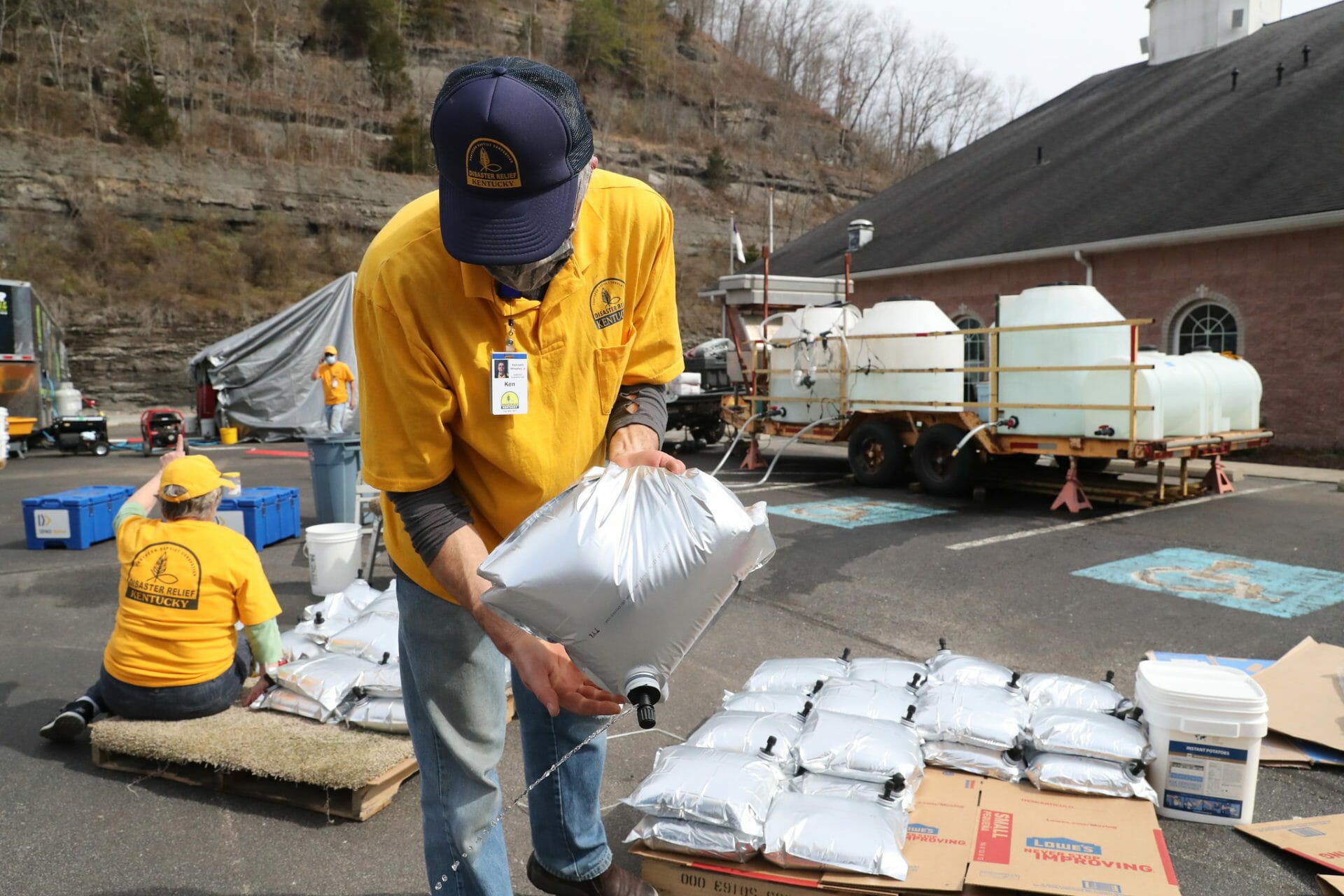
When disaster strikes, some of the first to respond to help are Southern Baptist disaster relief volunteers. Kentucky has an active disaster relief program which works in concert with similar programs in other states. Kentucky volunteers can staff feeding units designed to deliver thousands of hot meals on short notice, move in with chainsaws to help remove debris, do the dirty work of helping families remove mud from flooded homes and provide many other disaster relief services.
When disaster strikes, some of the first to respond to help are Southern Baptist disaster relief volunteers. Kentucky has an active disaster relief program which works in concert with similar programs in other states. Whether the disaster occurs in the state of Kentucky or elsewhere in the nation or the world, Kentucky volunteers may be called out to help.
More than 7,000 individuals are trained as disaster relief workers in Kentucky. Kentucky volunteers can staff feeding units designed to deliver thousands of hot meals on short notice, move in with chainsaws to help remove debris, do the dirty work of helping families remove mud from flooded homes and provide many other disaster relief services.
Southern Baptist efforts are correlated primarily with the American Red Cross, and with other private agencies through NVOAD, (the National Voluntary Organizations Active in Disaster.)
Kentucky Baptist Disaster Relief is part of the ministry of the Baptist Men On Mission Department. For more information about the program and training schedule, send e-mail to gro.tsitpabyknull@rd or call 502-489-3401 or 866-489-3527.
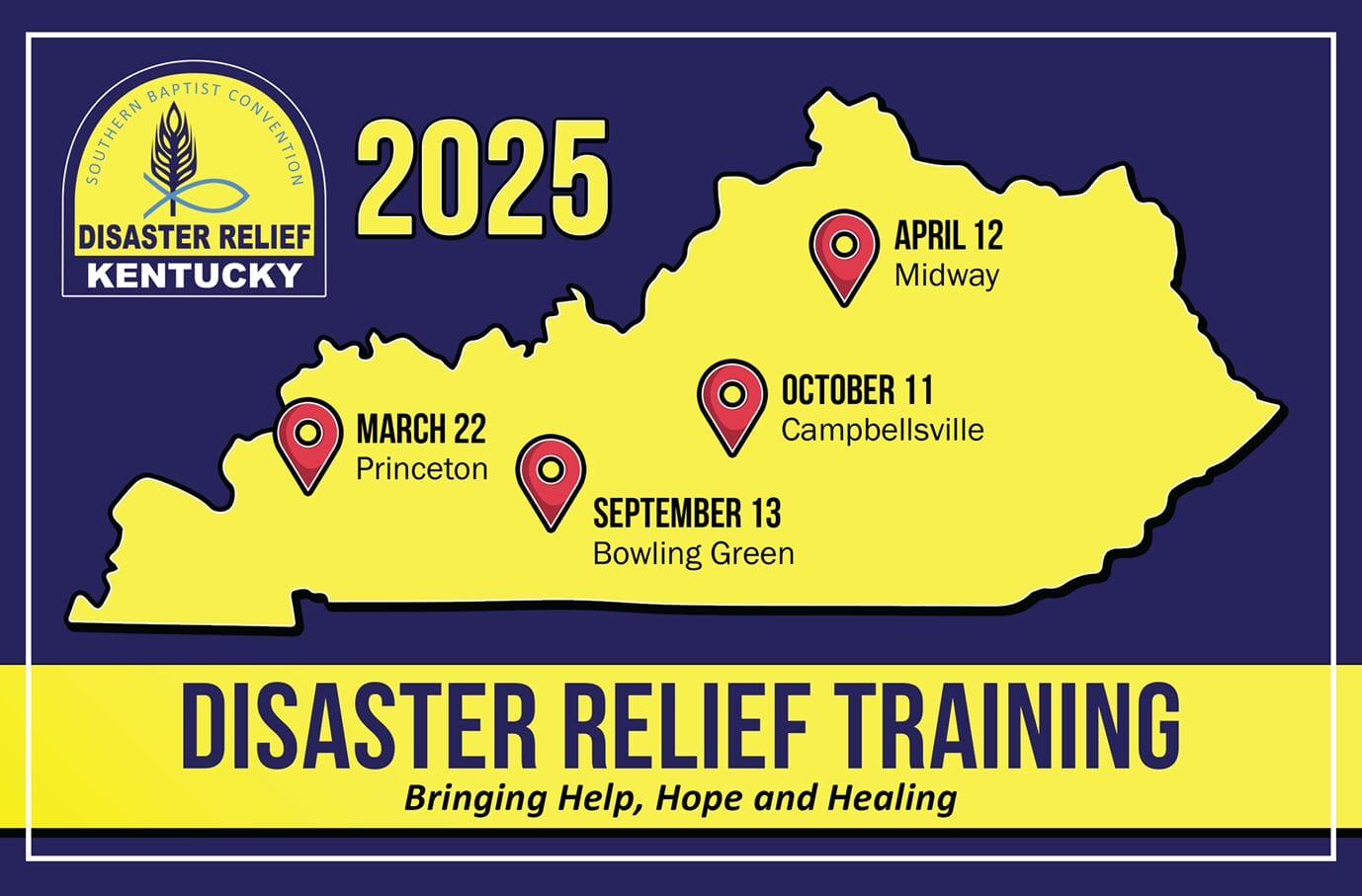
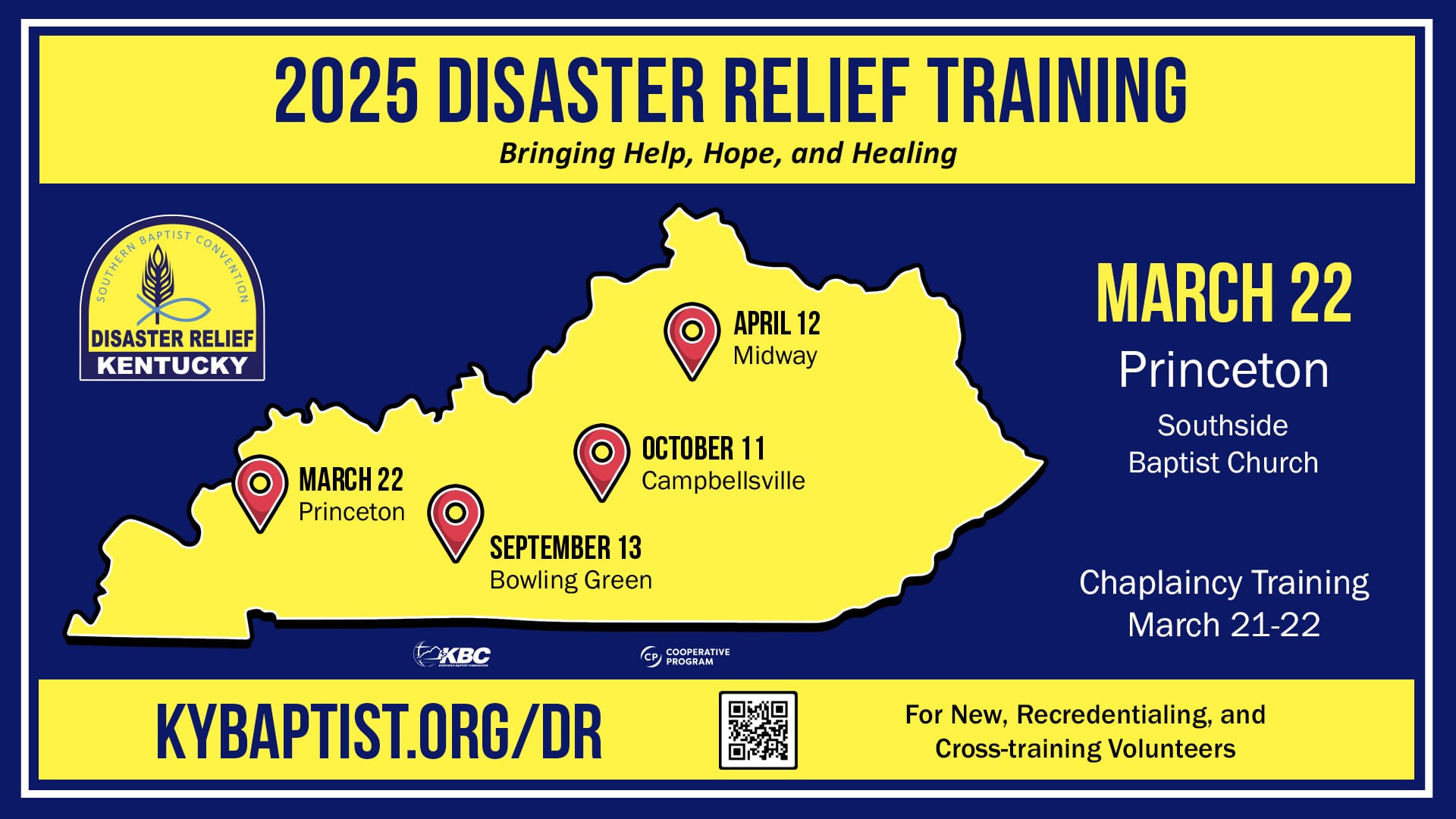
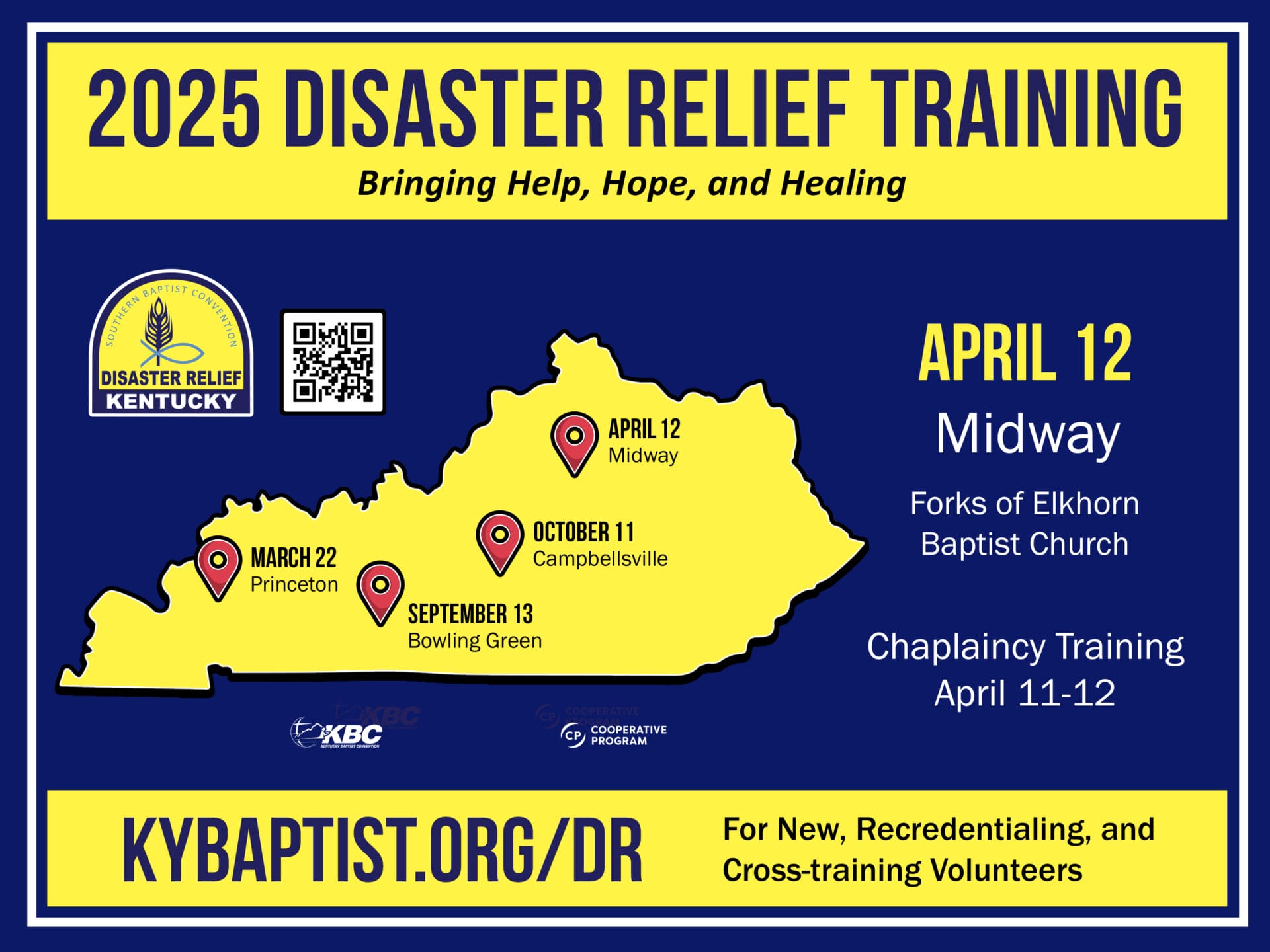
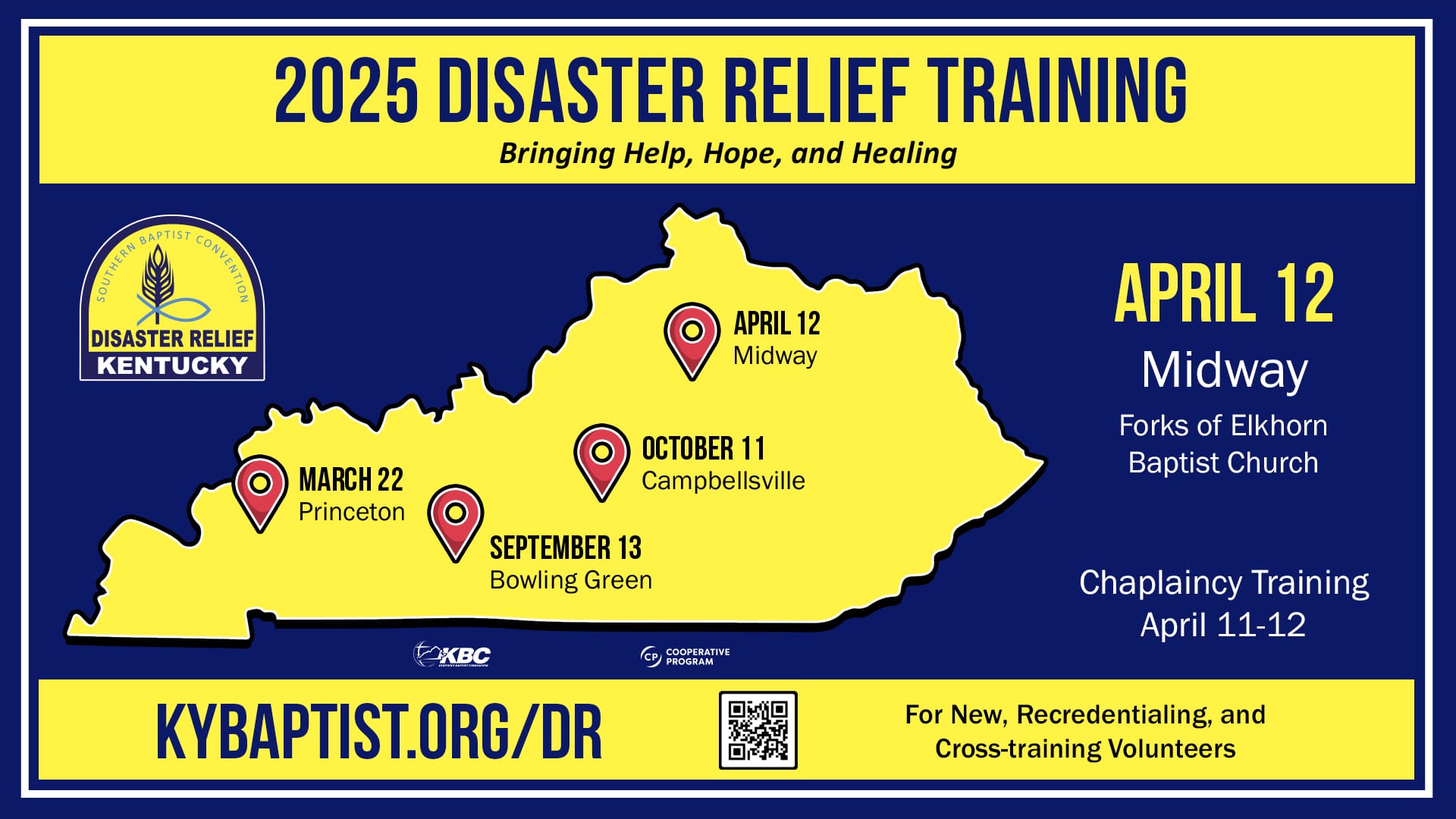
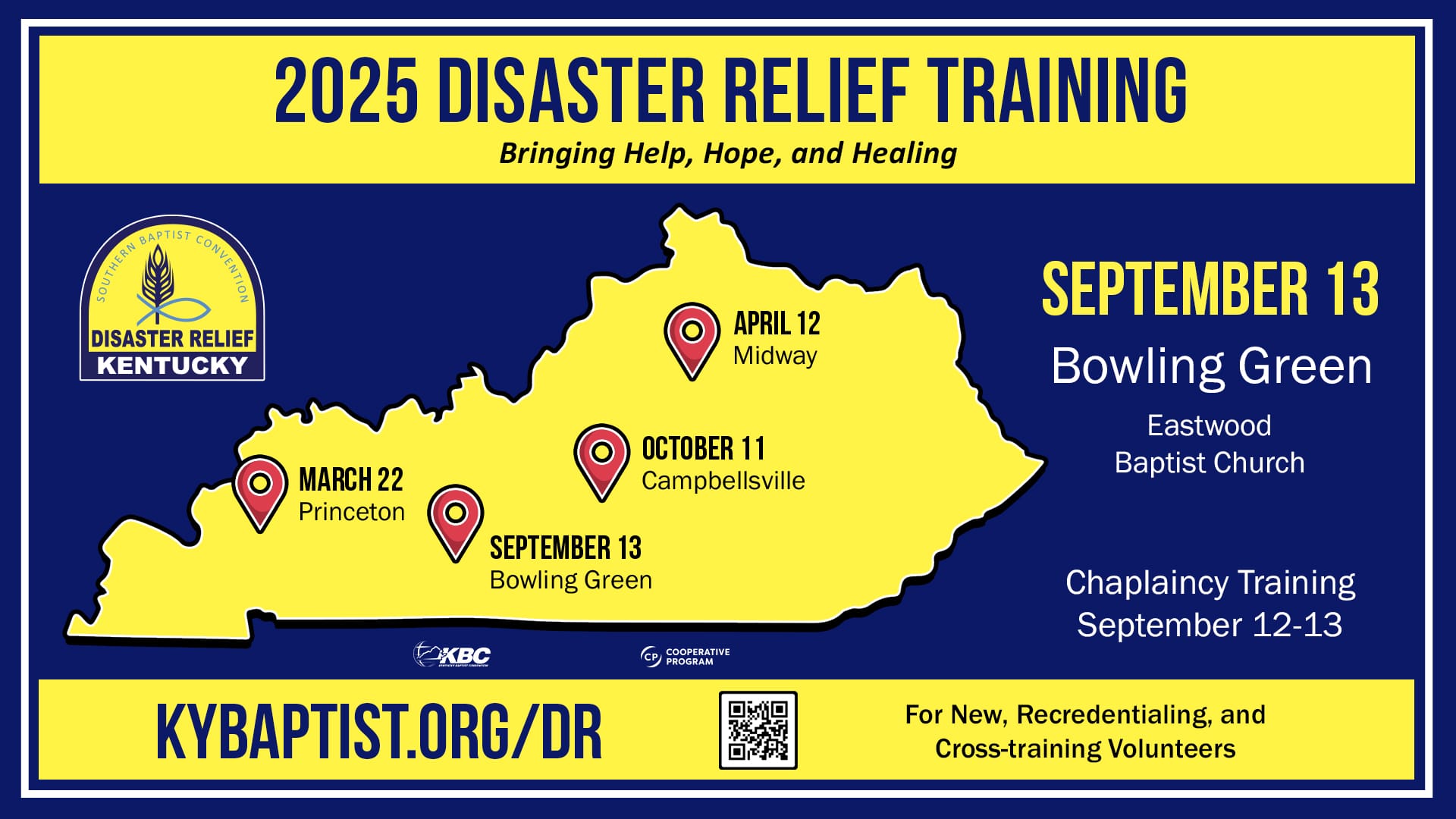
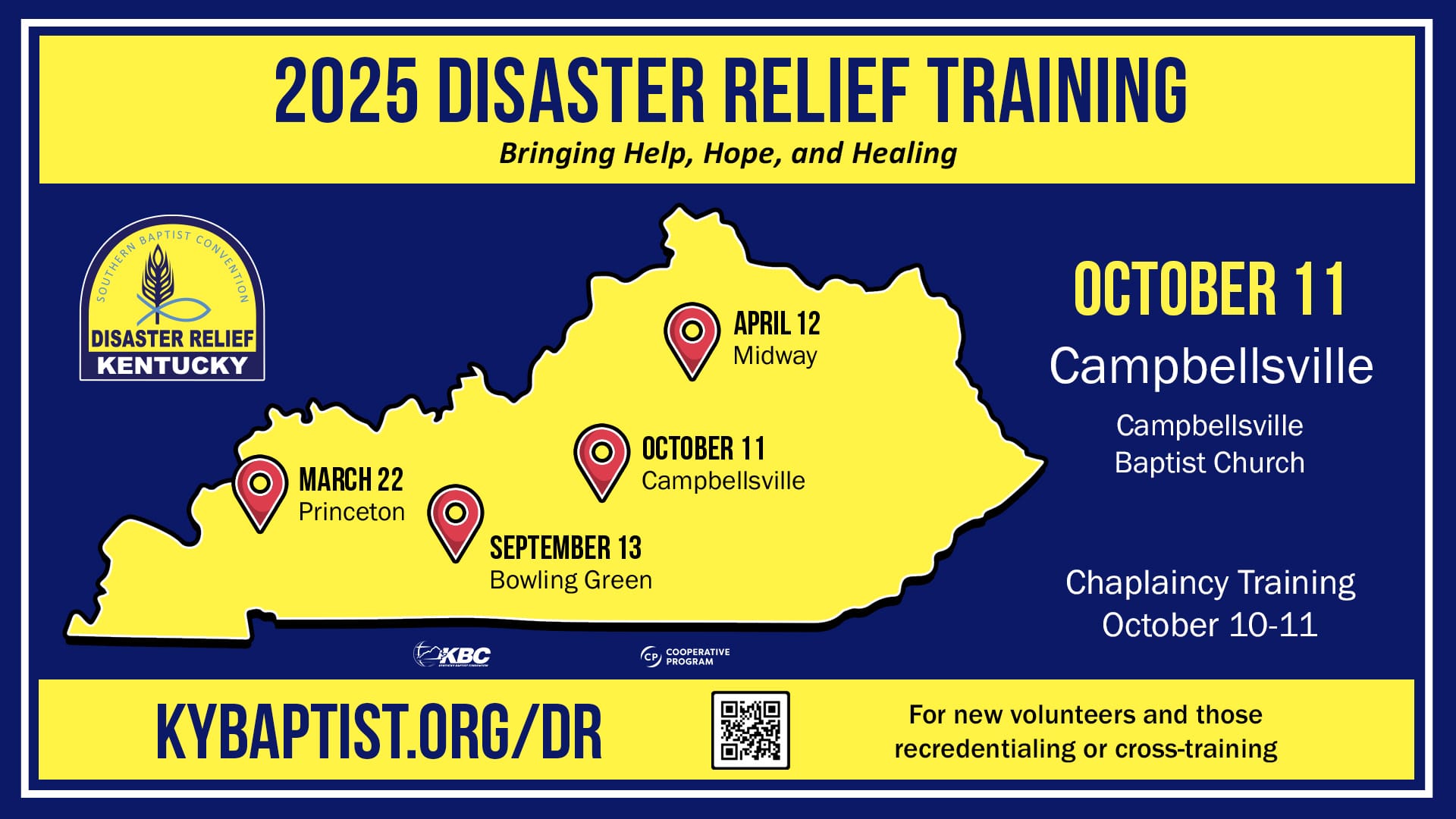
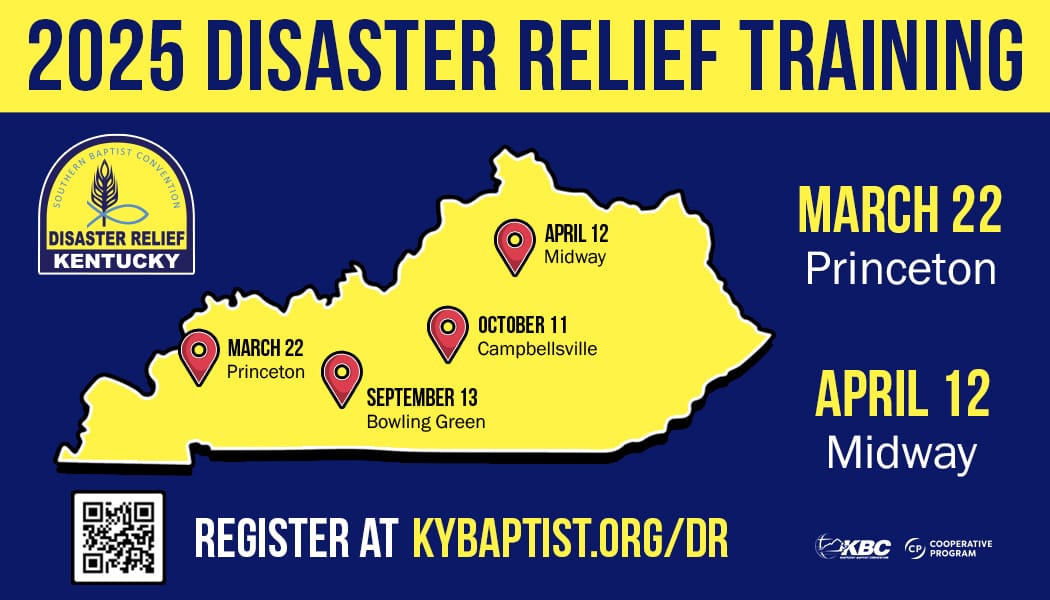
Click here for a list of upcoming training dates.
Southern Baptist disaster relief volunteers are required to be recertified every three years. In order to be eligible for recertification, all volunteers must complete training and submit to a background check. You must be at least 18 years old to serve as a Disaster Relief volunteer.
The Assessment Team is a first responder type team in to the disaster area. The team is made up of two to three persons that move through the disaster site making property damage assessments to determine the type of ministry teams need to help the victim to recover from the disaster.
Volunteers serving in the Assessment Ministry are required to have the following training:
For more information, contact our State Assessment Coordinator:
Albert Spencer 859-200-2130 moc.rennurdaornull@recnepspop
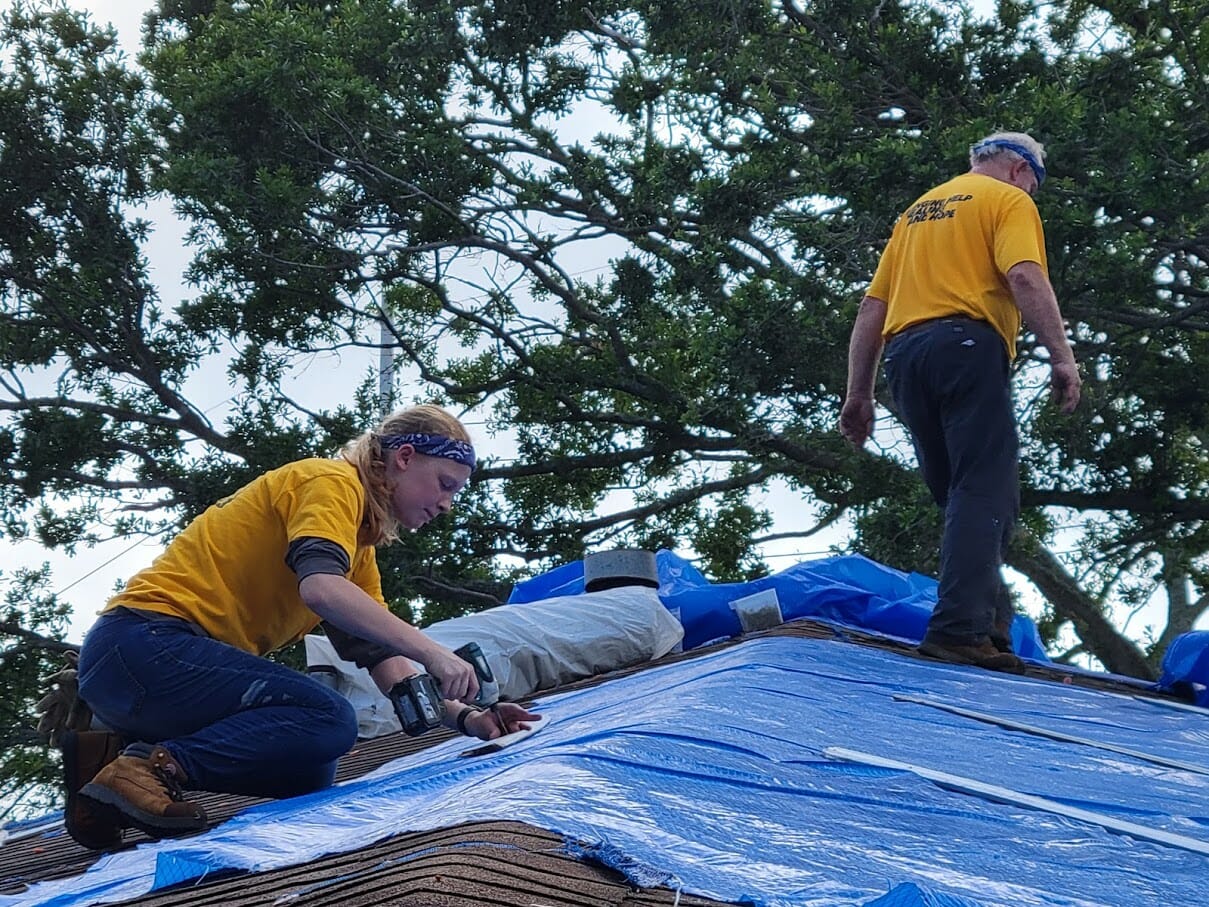
This area of Disaster Relief Ministry volunteers cut downed trees from homes and buildings. Volunteers also stacks logs in a location designated by the property owner. Also, our volunteers pull brush and stack accordingly. This usually occurs following tornadoes, ice storms and even hurricanes.
Training will teach disaster relief volunteers a consistent and safe method of chain saw operations Safety is of utmost and all volunteers will wear the safety attire and use the saw equipment provided.
Volunteers serving in the Chainsaw Ministry are required to have the following training:
For more information, contact our State Chainsaw Coordinator:
Harold Smith 502-649-7534 moc.loanull@1retnuhkleyk
Ministering to the spiritual and emotional needs of the survivors of a disaster. That’s the role of the disaster relief chaplain.
Every disaster relief team needs at least one chaplain, trained to care for people in the midst of crisis, which is their assigned task. Going door to door in a neighborhood where a chainsaw team is working provides many opportunities of ministry to a chaplain. In addition, stand-alone teams of chaplains may be deployed to minister in disaster situations if requested by the associational director of missions or disaster relief coordinator. Chaplains are also trained to identify and care for other team members who may be overwhelmed by the situation of the disaster.
Volunteers serving in the Chaplaincy Ministry are required to have the following training:
For more information, contact our State Chaplaincy Ministry Coordinator:
Dwaine/Cherie Martin 606-261-0749 760-218-9586 moc.liamgnull@nitramceirehc
The mission of our Communication ministry is to provide support communications between all deployed disaster services units, between KBC and its member churches and associations, between deployed units and KBC Headquarters, between those units and NAMB headquarters and between those units and partner agencies including the American Red Cross and the Salvation Army.
Trained Communicators may serve in any of four roles some of which require an amateur radio license:
Trained communicators are encouraged to attend a “once annual” training which gives the communicator hands-on experience on both the equipment at the DOC and the Command and Communications Unit.
Volunteers serving in the Communications Ministry are required to have the following training:
For more information, contact our State Communications Coordinator:
Tom Westerfield 270-348-2281 moc.oohaynull@yktsewmot
DRTCC (Disaster Relief Temporary Child Care) is the caring for children in the aftermath of a disaster while parents recover from the disaster by working with the relief agencies, insurance, FEMA and sometimes even going to work. We have the equipment segregated into age groups for ease in use. It is a ministry where children and parents are shown the love of Jesus at a time when care and attention are vital needs in their lives.
Duties include unloading and loading equipment out of and into the trailer, into a safe and secure building location, sanitize location, sanitize toys after use, volunteers will provide loving care for the children and sympathy for the parents.
DRTCC provides children with love, continuity, cleanliness, acceptance, and a calm atmosphere. It provides a ministry of relief, understanding, compassion, love, referrals and sharing the gospel.
DRTCC volunteers are “ambassadors for Christ” and as representatives of the local church and association can assist in the building of a caring atmosphere and reputation. We develop awareness for mission opportunities and provide information among the membership of local churches and associations for follow-up.
Volunteers serving in the Temporary Childcare Ministry are required to have the following training:
For more information, contact our State Childcare Coordinator:
Greta Wilson - 606-224-0005 gro.tsitpabyknull@nosliw.aterg
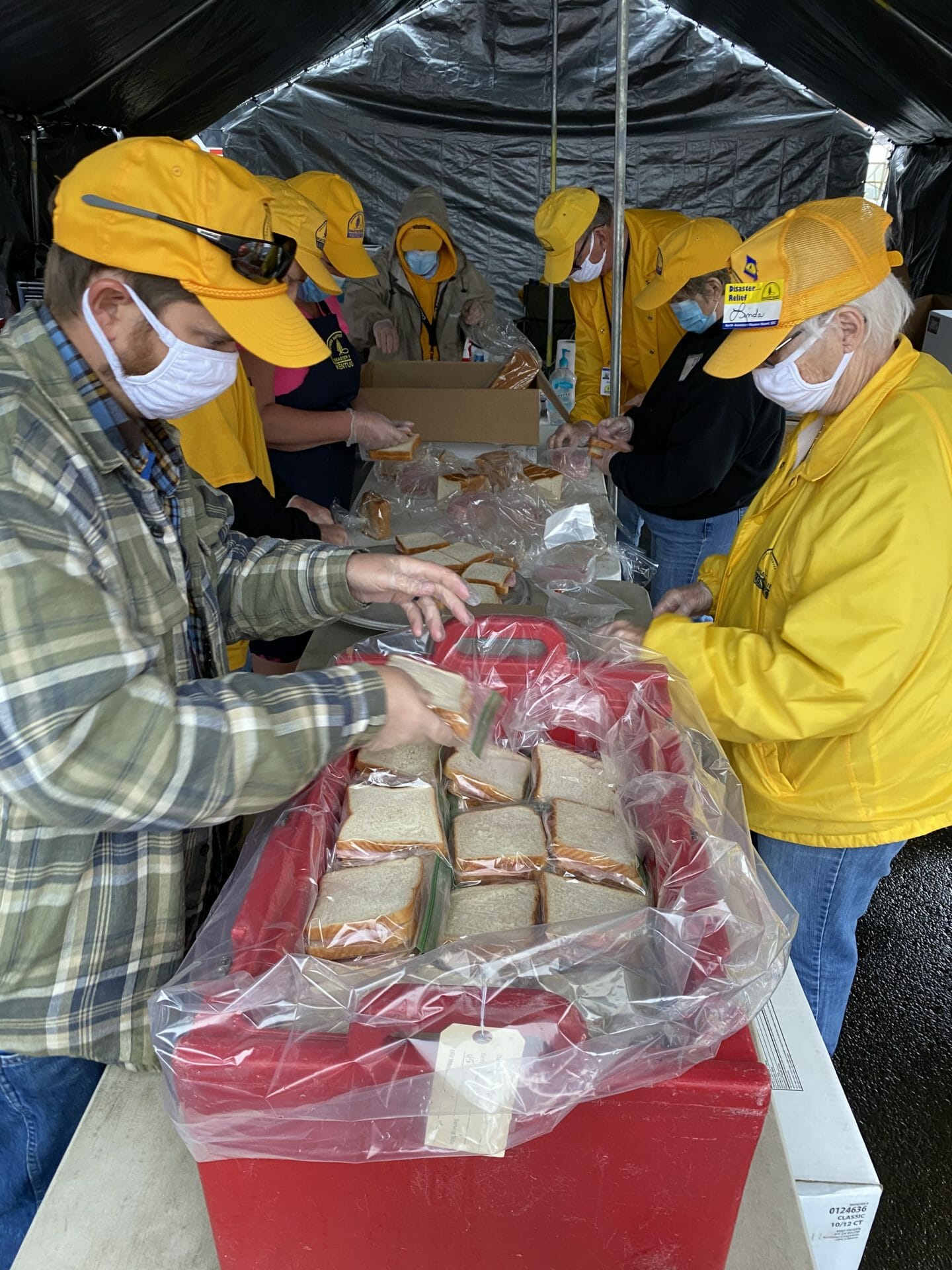
Disaster Relief Mass Feeding Ministry volunteers prepare hot meals using a field kitchen to feed victims of a disaster and the volunteers who serve them, preparing containers for use in Red Cross or Salvation Army vehicles for serving, inventory food, clean up area, wash cooking utensils and pots, move full cases of food from storage to the kitchen for use, unload truck and load truck, set up field kitchen and take down field kitchen.
The day usually begins around 5 a.m. and ends around 6 p.m.
Volunteers serving in the DR Mass Feeding Ministry are required to have the following training:
Additional Training offered:
For more information, contact our State Mass Feeding Coordinator:
Karen Smith 502-649-1318 moc.loanull@nerakwammam
Our purpose in the ministry of is to help disaster victims see the love of God in action. Every act and every word should have as its goal the drawing of the victim to a loving relationship with Jesus as they see Him work in and through you as a volunteer. Volunteers will remove furniture, carpet, appliances, etc. damaged in a house as a result of flooding to prepare the home for rebuild.
Normally a Cleanup/Recovery and Flood Relief unit will be a trailer that is equipped with various types of tools and equipment that help facilitate the volunteers in this ministry. Some of the items that would be included in the ministry trailer would be protective gear, including covering, gloves, and often a mask to prevent breathing in toxic air. Hazmat suits, rubber boots, generator, air compressor, hand tools, power tools, hard hats, cots and air mattresses, ropes, wheelbarrow, rolls of polyethylene and many other items to assist our volunteers are included. The “How to Manual” for Cleanup/Recovery and Flood Relief has a section of suggestions that can help the home owner deal with restoration from flooding.
Items removed will be taken to a designated area away from the home to a location (normally curbside) for debris removal.
Volunteers serving in the Flood Relief Ministry are required to have the following training:
For more information, contact our State Flood Relief Coordinator:
Larry & Elaine Koch 502-649-6566 502-649-6585 gro.tsitpabyknull@hcok.yrral
This ministry is an essential ministry for the victims of disasters, as well as the trained disaster relief volunteers and other volunteers that are providing service to the victims. This is a ministry that helps to keep the victims and volunteers in clean clothes following long days of mudding out or cleaning up debris. Volunteers maintain the shower trailer unit in working condition, clean showers after use, launder towels and wash cloths, also launder volunteer clothing as needed. A normal day involves cleaning the unit thoroughly and doing laundry during the day while volunteers are out in the community ministering to the disaster victims.
Volunteers serving in the Shower/Laundry Ministry are required to have the following training:
For more information, contact our Shower/Laundry Coordinator:
Cindy Henderson, Disaster Relief Ministry Assistant 502-489-3404 gro.tsitpabyknull@nosredneh.ydnic
The goal of Disaster Relief Church Preparedness Manual is to assist churches to prepare for disaster by developing a strategy to minister to their communities during crisis through preparing their facilities, training their members, securing supplies, and developing protocols that will activate their disaster response plan.
The goal of the Disaster Relief Associational Preparedness Manual is to help associational leadership learn about disaster relief needs and resources in their area, evaluate their disaster relief possibilities, and develop plans and protocols to assist churches in responding to the community following a disaster.
The goal of the Disaster Relief Family Preparedness Manual is to help families learn about the disaster hazards in their community and develop a plan to survive after a disaster event as well as to minister to others.
You can contribute to general disaster relief efforts here.
Contributions also can be made by mail to the Kentucky Baptist Convention by writing “Disaster Relief” in the memo line of your check. Gifts should be mailed to the KBC at P O Box 950295, Louisville, KY 40295-0295.
The Kentucky Baptist Disaster Relief ministry has made a difference for thousands of people here in the commonwealth and around the world. The need for food, hot showers, clean laundry and helping hands to clean up after a crisis will remain as long as natural and man-made disasters affect our world. Kentucky Baptists and others who wish to ensure the future of the disaster relief ministry so others are never without this Christ-centered help, can make a legacy gift specifically for this work. Discover the many giving options available by contacting the Kentucky Baptist Foundation at (502) 489-3533 or (866) 489-3533 (toll-free in Kentucky).
This ministry receives funding through the Eliza Broadus Offering.
send an e-mail
(502) 489-3401
(866) 489-3527 (toll free in Kentucky only)
(800) 266-6477
(502) 245-4101
Mailing:
P.O. Box 43433
Louisville, KY 40253-0433
Physical:
13420 Eastpoint Centre Drive
Louisville, KY 40223-4160
Help victims of the Oklahoma tornado. Give online now to support Disaster Relief.